 mdi Consultants, Inc
06
Aug
FDA Releases FY 2027 MDUFA Fees
FDA Releases FY 2027 MDUFA Fees New 510(k), De Novo, PMA & Establishment Registration Costs Are Here! Is Your Regulatory Budget Ready? Effective Date: October 1, 2026 – September 30, 2027 The U.S. Food and Drug Administration (FDA) has published the Medical Device User Fee (MDUFA) rates for Fiscal Year (FY) 2027. The new fees

05
Aug
Complaint Handling Under QMSR: Where the FDA Audit Trail Begins
Short answer: Since February 2, 2026, complaint handling under 21 CFR Part 820 is governed by ISO 13485:2016 Clause 8.2.2 together with FDA's supplemental record requirements in § 820.35. Medical Device Reporting under 21 CFR Part 803 did not change: manufacturers must report a death, serious injury, or reportable malfunction within 30 calendar days of
22
Jul
510(k) vs. De Novo vs. PMA: How to Choose the Right FDA Submission Pathway in 2026
Launching a medical device in the United States begins with one of the most important regulatory decisions you'll make—determining the correct FDA premarket submission pathway. Should you submit a 510(k), pursue a De Novo Request, or prepare a Premarket Approval (PMA) application? The answer depends on your device's intended use, technological characteristics, risk classification, and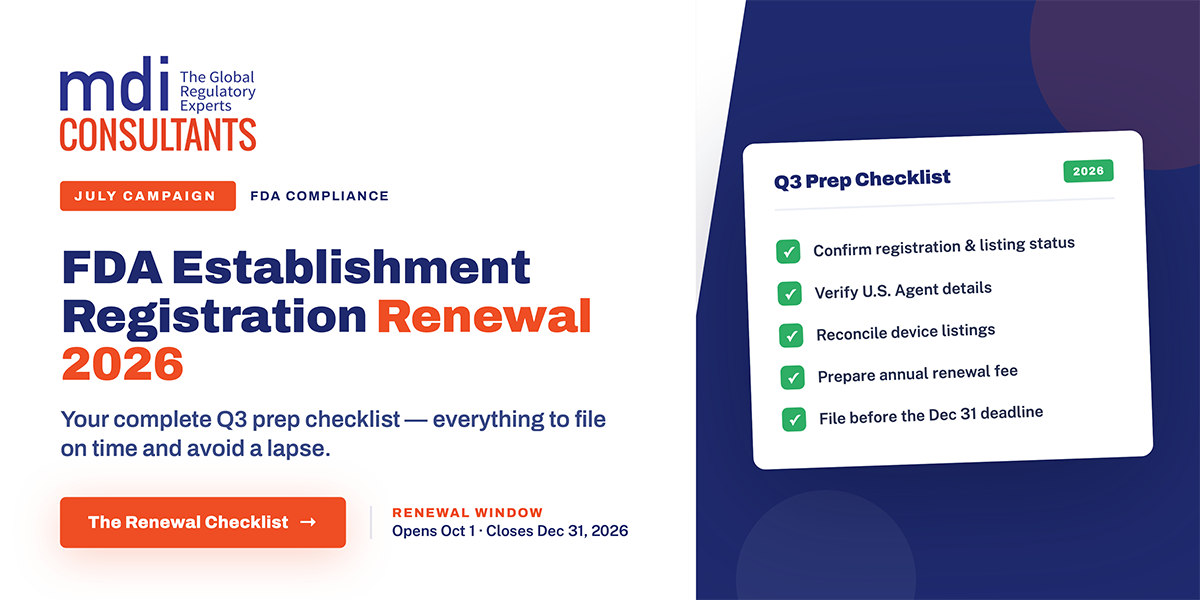
14
Jul
FDA Registration Renewal Opens October 1
FDA Registration Renewal Opens October 1: Your Complete Prep Checklist Every FDA-registered medical device establishment must renew its Establishment Registration between October 1 and December 31, 2026. There is no grace period. If your registration is not renewed by the deadline, it will expire on January 1, 2027, potentially resulting in shipment delays, import holds,
07
Jul
Is Your Product Still an FDA-Regulated Device in 2026?
The Answer Might Surprise You. One of the most common questions we have received from manufacturers, software developers, and startup founders this year is: Is my product still considered a medical device by the FDA?" The short answer is: maybe not—but don't assume. In 2026, the FDA continued refining its approach to certain low-risk health
06
Jul
Avoiding FDA regulatory issues in your device development
Why Medical Device Startups Struggle With FDA Regulatory Approval: 10 Common Mistakes Quick Answer Medical device startups most often fail to reach market on time because they treat FDA regulatory compliance as a final step rather than building it into product design from the concept stage. The 10 most common causes of medical device startup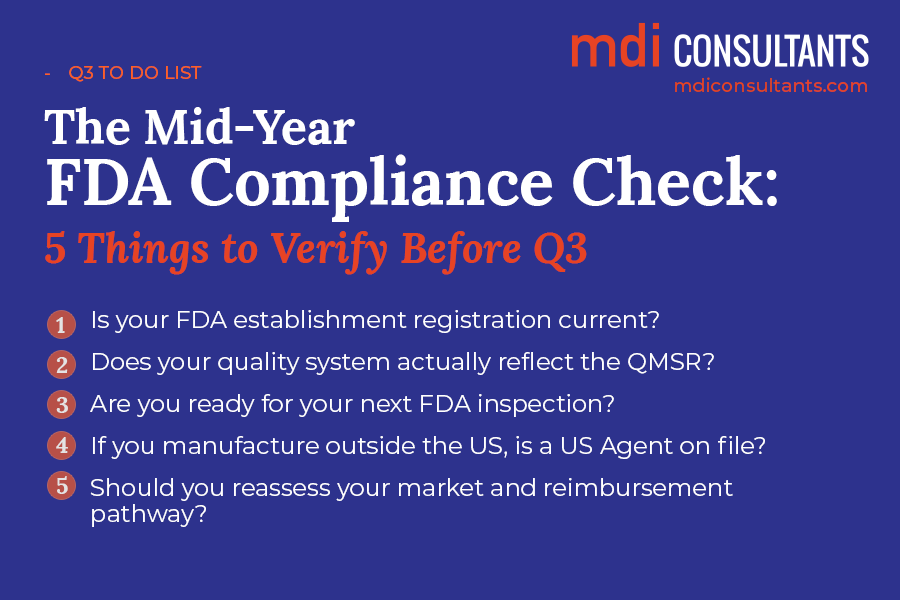
The Mid-Year FDA Compliance Check: 5 Things to Verify Before Q3
Short answer: Before Q3 begins, medical device companies should verify five key compliance areas: FDA establishment registration, QMSR implementation, inspection readiness, U.S. Agent designation (for foreign manufacturers), and the status of any open FDA 483 corrective actions. Addressing these items now can help avoid compliance issues and last-minute challenges during the October registration renewal period.

16
Jun
FDA Establishment Registration for Medical Devices — What Foreign Manufacturers Get Wrong
For foreign medical device firms, FDA establishment registration and U.S. Agent designation are not optional—they are mandatory requirements for accessing the U.S. market. Errors in either process can lead to shipment delays, import holds, or FDA Import Alerts that disrupt business operations and market access. Drawing on nearly 50 years of regulatory experience and

10
Jun
What FDA Inspectors Are Actually Checking Under the New QMSR — MDI’s First-Hand Findings
What FDA Inspectors Are Actually Checking Under the New QMSR — MDI’s First-Hand Findings The single biggest focus area in every QMSR inspection that MDI has participated in is not your quality manual, SOPs/work instruction, documentation structure or your terminology — it is your organizations ability to demonstrate risk-based thinking embedded throughout your entire quality